I tried and (dramatically) failed to learn machine code as a teenager, so ever since then I’ve generally avoided “coding” like the plague. But after a colleague mentioned it in passing, I decided take a brief look into “vibe coding”, which is building software entirely through natural language prompts to an AI. I thought that I might learn something about Edtech and possibly develop something that I could use in my classes.
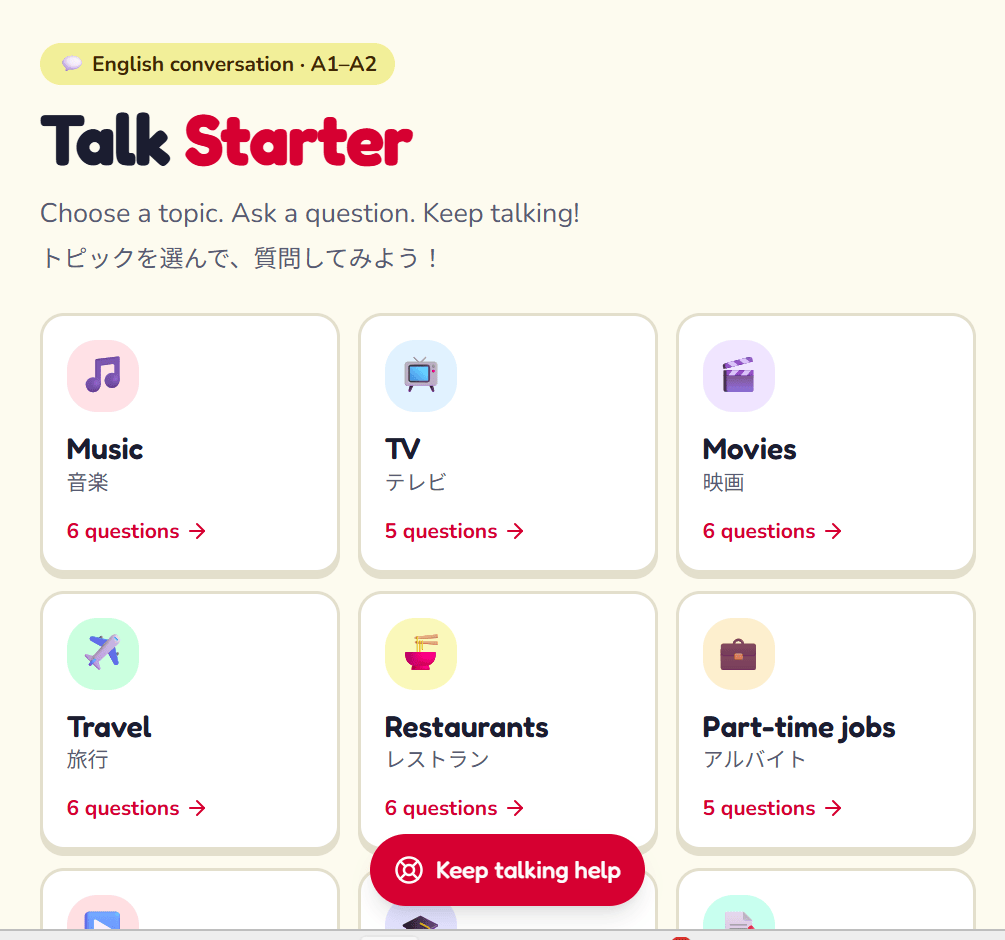
Not knowing where to start, I asked a couple of quick questions of Gemini, which has recently been a standard fixture in the top right hand side of my computer screen. Within a minute, it had generated a piece of code that could give learners in my writing class autonomy and support through topic choices and feeder sentences. I was absolutely stunned by the speed and efficacy of the code generation.
After signing up for Netlify, a free service that hosts the code, I was able to share the link with students in class and get them writing using it straight away.
Since then, I’ve built a few more apps to employ in my classes with a particular focus on choice and support. Having experimented with other ways and means of coding using tools such as ChatGPT and Canva too, I’ve found this approach remarkably flexible. For example, I (well, actually the AI) built a web app to ask students “What topic do you want to talk about?”) then give them some focused support (e.g., prompting them with starter questions). Clearly, the possibilities extend far beyond this, but this is a really interesting place to start.
Anyway, if someone like me (with an abject fear of coding) can create this kind of app in just a few minutes, then surely any educator with a bit of imagination and a few minutes to spare could do the same. Why don’t you give it a go?
When I made my first recording with a student about her study abroad experiences, I had no idea that it would grow into a six-year project involving more than 170 episodes. What started as a small experiment eventually developed into one of the most rewarding parts of my teaching life.
What the Podcast Is
The podcast is aimed at the university-aged students in my department. It includes a mixture of short monologues, conversations between two people, interviews with students and staff, and occasional videocasts recorded by students. Topics cover culture, language tips, study abroad, and university life. We now have twelve seasons, with around 180 publised episodes available on Spotify.
Why I Started
When I launched the podcast in 2019, I felt our curriculum was heavily focused on reading and writing, but offered limited listening practice. Although we had intensive listening tasks in class, I wanted something that students could listen to extensively and informally outside class.
The timing also played a role. The podcast began at the start of the coronavirus pandemic, which removed many opportunities for casual interaction. It offered students a way to hear teachers and classmates speak naturally at a time when we couldn’t have classes together. Students returning from study abroad had stories worth sharing, and this gave them a voice.
There was also a professional development aspect for me. Learning how to create and distribute a podcast felt valuable and directly relevant to teaching in the digital age.
What I Learned
Starting a podcast is far simpler than many people imagine. I used Anchor (now Spotify for Creators), and it handled hosting and distribution for free. For a small, niche podcast like ours, it worked perfectly.
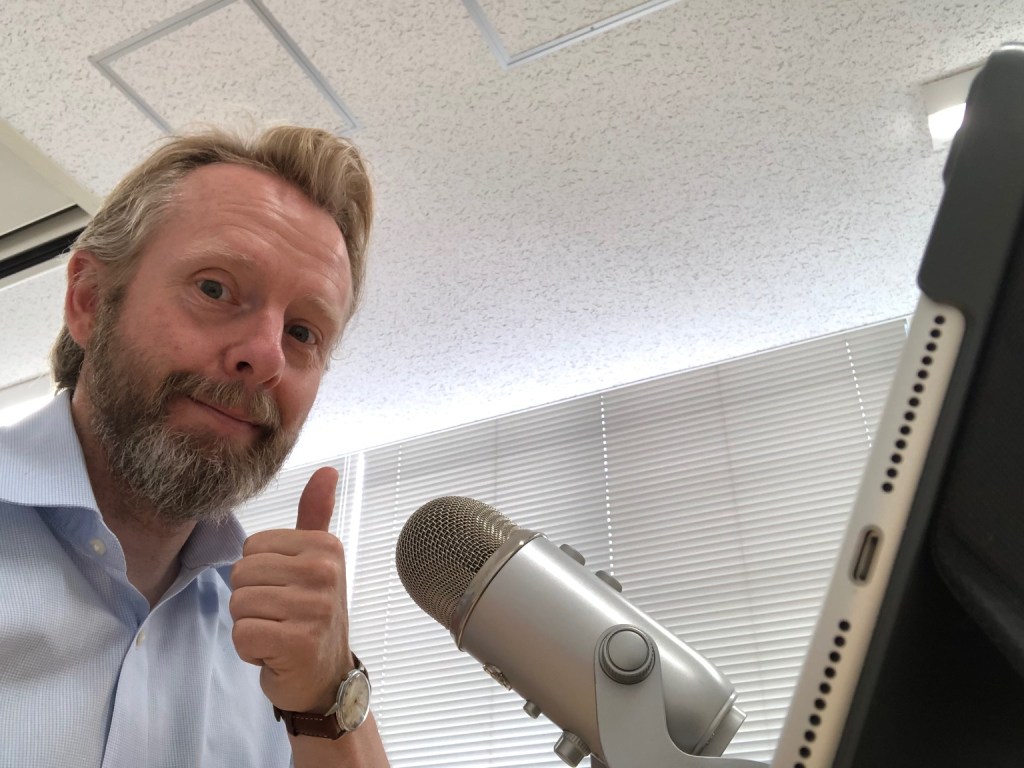
The equipment does not need to be sophisticated. Although I bought a condenser microphone, pop-shield and audio interface, I ended up recording most episodes using the microphone on my iPad or iPhone. Editing was typically limited to trimming the beginning and end of the audio in GarageBand.
Production gets faster with experience. Once I had a system, I could record a five‑minute episode in under twenty minutes. I wrote rough scripts early on, but AI has made drafting much quicker in recent years.
Topic choice matters. Popular themes included pop culture, British culture, language tests, brand histories, and language tips. The most listened‑to episodes by far were interviews with students about their study abroad experiences. Over time, these have been integrated into our study abroad preparation courses, helping students learn from real voices and real situations..
Student involvement is powerful, even if difficult to coordinate. Students rarely volunteered, but almost all who participated felt proud afterwards. I would have liked more student‑generated content, although managing this takes more time.
The Future
Recently I experimented with videocasts since Spotify now supports video. I expected this to be more appealing since many students are heavy YouTube users. Surprisingly to me, the listener numbers did not change. It may be that Spotify may not be the best place for video. Perhaps if the videocasts were uploaded to YouTube, they might attract more engagement. In addition, video production takes significantly longer than producing audio‑only episodes. Even short clips require much more editing time, and this extra workload is difficult to justify for a small, niche project.
Looking ahead, I am aware that AI-generated podcasts are becoming more common. High‑quality automated content will likely fill podcast platforms in the near future. Even so, I believe there will always be a place for authentic student voices. Real experiences and real conversations have a value that AI cannot replace. Whatever direction the project takes, it has been a meaningful part of my work, and I hope it continues to provide students with something useful.