In classes, I often find myself falling back on the same piece of advice: read more. It usually comes up when students ask how to improve their vocabulary or push their scores up on tests like TOEIC or TOEFL. I was really pleased to see that some courses at my new job include an extensive reading component (via Xreading), as I am a firm believer in the power of ER. What surprised me, though, was the sheer amount of avoidance and cheating that went on among the students. Yet, as irritating as that was to experience, it did force a bit of honest self-reflection: why don’t I follow my own advice when it comes to my Japanese learning and actually read a bit more? Here’s what I came up with.
Time and Energy
The issue of time is obvious, but is an important one for me. Since starting a new job, most of my attention has been taken up with getting used to new systems, preparing classes, and dealing with professional development. On top of that, I already spend a good deal of time reading for work, mostly academic papers. By the time I get home, the idea of picking up a Japanese book does not feel especially appealing. Whilst students are not in exactly the same situation, their schedules are not empty either. Between classes, assignments, and part-time work, they probably have a bit of a struggle finding time to do their reading.
The Screen Trap
Screen time is another major obstacle, and it affects me just as much as my students. While I manage to avoid the endless doomscrolling of TikTok or Instagram, I am far from immune to digital distractions. In the evenings, it is all too easy to give in to the tempting, dopamine-driven algorithm of YouTube instead of picking up a book. For students who have grown up entirely surrounded by short-form video and interactive media, sitting down with a plain page of text must require an even greater effort of concentration. When your brain is wired for instant hits, traditional reading must seem painfully slow by comparison.
Choice and Content
Finding material that genuinely interests me has been harder than I expected. In English, there is a massive range of graded readers covering everything from crime thrillers to simplified classics. With Japanese, the choices feel noticeably narrower. A lot of the material I come across leans towards folk tales, historical figures, or fairly safe informational topics. While there is nothing wrong with those, they are not things I would choose to read in my own language. There are some exceptions, though. For example, I remember enjoying a simplified version of Oscar Wilde’s The Happy Prince, and I recently bit the bullet and bought a subscription to Satori Reader because the content actually looked interesting. However, it does, of course mean more screen time.
Convenience and Physical Books
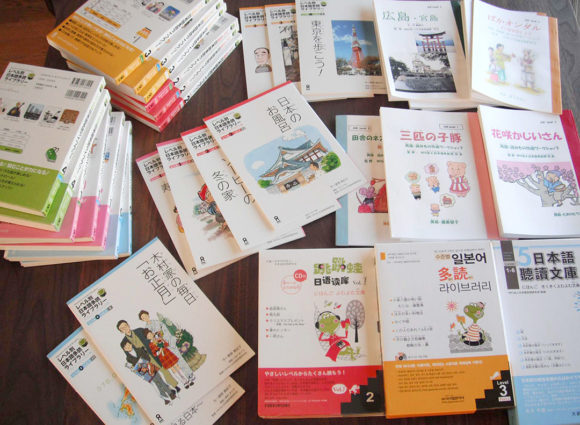
Access to graded reading materials is also something of an issue. Physical graded readers in Japanese are not always easy to source, yet I still prefer them over reading on a device. There is a tactile satisfaction in turning physical pages and seeing actual progress that a digital progress bar just cannot match. However, after spending most of my working day staring at a computer screen, switching to an e-reader or phone app for recreation feels uninviting, which leaves me stuck between hard-to-find paper books and eye-draining screens. Digital options like Satori Reader offer a great compromise on content quality, but overcoming that extra evening screen fatigue will no doubt be quite tough.
Cost
Financial investment plays a role here too. Graded readers are relatively expensive, especially given how quickly you read through them. Paying a high price for a thin book that might include outdated extras like companion CDs often feels like a poor return on investment, making it harder to justify building a personal library.
Initial Resistance
Beyond time, cost, or availability, there is the sheer friction of getting started. Even when I have a suitable text right in front of me, taking that first step takes more willpower than it should. It is always easier to push it off until tomorrow. The standard advice is familiar enough: keep sessions short, build a habit, and read a little every day. It is exactly what I tell my students, yet putting it into practice is a definite sticking point.
Where That Leaves Things
Thinking through these points has not changed my belief that reading is valuable, but it has made my own advice feel a bit less straightforward. If an English teacher who understands the theoretical benefits of Extensive Reading still struggles with time, screen distractions, content selection, and friction, it is hardly surprising that language learners struggle too. Closing the gap between recommending reading and actually doing it is where the real work lies. Let’s see how I get on with Satori Reader.


 Richard Ingham