A Week of TBLT Synchronicity

It’s been something of a week of TBLT (Task-Based Language Teaching) synchronicity. I’d noted in a previous blog my thoughts on the importance of tasks in my new context; then, a co-worker mentioned his use of TBLT, two related JALT pieces (an exposition by Rod Ellis and an interview with Shoko Sasayama) dropped through my analog mailbox, and I spotted an online seminar hosted by Tokyo JALT by Marcos Benavides of JF Oberlin University.

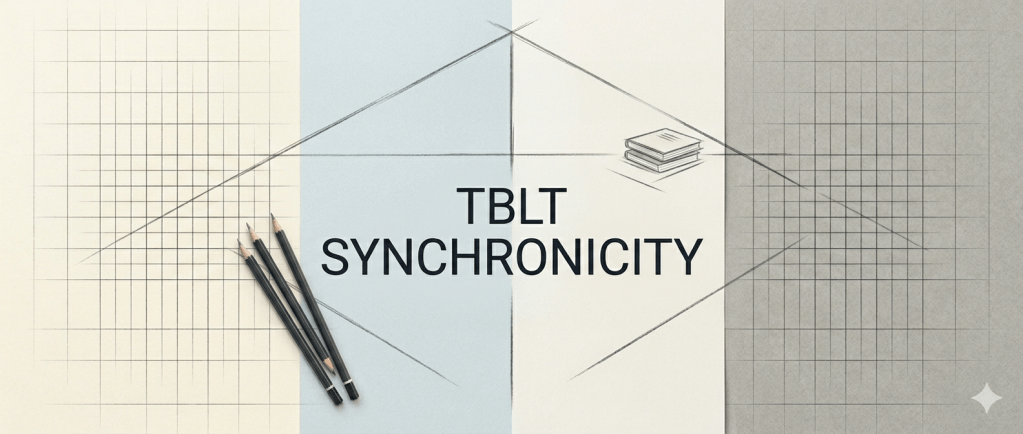
One of the most interesting things I got from this week’s festival of TBLT goodies was Benavides’s analogy of the artist. Traditional teaching is like a grid: we focus on one tiny square of grammar at a time, hoping the student eventually develops enough squares to produce a whole picture. It’s precise, but often demotivating because the “meaning” is buried. TBLT, by contrast, is more like a holistic sketch. From day one, the student draws the whole picture. It’s messy and imperfect, but it is meaningful from the start. As teachers, our job is to help the students gradually improve the whole image through feedback and repetition.

Although I have used “tasks” in the past to augment structured teaching, this was not pure TBLT, but rather Task-Supported Language Teaching (TSLT). The distinction has finally clicked. In TSLT, we teach the language forms first, which can trap students; they stop trying to communicate and focus too much on producing accurate forms. In “pure” TBLT, we let them use their own resources first. Watching Benavides’s videos of lower-level learners successfully navigating market research reports was fascinating. Whilst not perfect, they were effectively communicating their ideas.

The reality of teaching in a Japanese university means institutional structures and exams are often built on traditional foundations. However, I liked the advice from both Ellis and Benavides to keep the two approaches separate—a “Dual” or “Hybrid” approach. I think that this offers a practical window for my own professional development. By keeping a structural component and a task-based component distinct, I can wait for the right opportunities to experiment with “pure” TBLT when time (and energy) allows. I can see that this could help carve out a space for experimentation without going all out fo TBLT from the get go.

Final thought and key takeaways:

  • A Task must have a “Gap”: If there’s no information or opinion to exchange, it’s just an exercise.
  • Assessment follows Outcome: Did they achieve the goal? Accuracy of language is secondary to the communicative result.
  • Sequence by Complexity: Move from a simple task such as a short “elevator pitch” to a “formal presentation” and build learner confidence and fluency through repetition.
  • TBLT is a work in progress rather than a monolithic theory, requiring us as teacher-researchers to be flexible, experimental, and patient.

Starting a New Role: Early Reflections

I recently started a new position, and after the first stretch of teaching, I wanted to note a few early thoughts. These are very much initial impressions, and I expect my understanding to develop over time as I settle in.

1. Adjusting to Different Proficiency Levels

One of the most immediate differences has been the overall proficiency level of students. At lower levels in particular, tasks require more careful setup and support. Activities are finished quite quickly, which means lessons need a greater number of shorter activities.

This has all kinds of implications for pacing and teacher energy. Lessons have felt quite intensive, with a need for sustained attention to scaffolding, modelling, and choral drilling. My voice took a bit of a battering during the first week or so and I got a pretty bad sore throat, from which I fortunately recovered fairly quickly.

2. Student Motivation and Classroom Behaviour

Since students are mostly enrolled in compulsory English classes, engagement can vary, and maintaining focus during activities requires consistent monitoring and encouragement. There is also a noticeable emphasis among some students on completing tasks efficiently. This occasionally comes at the expense of actually using English to complete tasks in communicative activities. It is necessary to consistently encourage and support the use of English to ensure students remain on task.

At lower levels, clarity of instruction is especially important. I have found a much greater need for ICQs (Instruction Checking Questions) to make sure the class know what they have to do. Even simple instructions can take time to process, and I have occasionally drawn on (my rather limited) Japanese to support understanding. This has helped maintain lesson flow, although I am aiming to balance this with maximising exposure to English.

3. Homework and Out-of-Class Learning

Students are assigned a substantial amount of homework, including e-learning components and vocabulary study. In practice, completion rates, particularly at lower levels, can be uneven. One approach that has been suggested is to allocate some class time for students to begin homework tasks. Whilst I am sure that this can help ensure engagement, it also raises questions about how best to balance this with time for communicative work during lessons.

4. Materials and Pedagogical Orientation

The course textbooks and materials differ from those I have used previously, and becoming familiar with their structure and sequencing will take some time to adjust to. There is a strong focus on bottom-up listening skills, including suprasegmental features, which play an important role in supporting beginner learners. At the same time, my early experience has highlighted the value of incorporating tasks that create a clearer need to communicate. I am interested in exploring how task-based elements can complement the existing materials and support more meaningful language use in class. This is something I hope to develop further and will return to in a future post.For now, I am working within the materials, experimenting with different activities, and identifying what works best.

5. Institutional Systems and Processes

As expected, institutional systems differ from place to place. While I have prior experience with Moodle, the platform is used more extensively here, with a wider range of functions available to instructors. Becoming familiar with these features has taken some time. Some textbooks have their own LMS for students and (I am pleased to report) that there is an extensive reading element via the online platform XReading. There are also additional internal systems for tasks such as attendance tracking. I am still in the process of learning how all these systems operate, although I expect this will become more straightforward with regular use.

6. Research Directions

This transition has also prompted some reflection on my research interests. Much of my previous work has focused on supporting independent learning outside the classroom including goal-setting approaches such as SMART goals. In the current context, where motivation and proficiency levels vary, I may need to adapt this focus. At the same time, there appear to be clear opportunities to continue developing work in areas such as extensive reading and listening, potentially in ways that fit more closely with students’ immediate needs.

7. Settling In

As with any new role, there is an initial period of adjustment. The range of new variables, from student needs to institutional systems, can feel demanding at first. That said, things are already becoming more familiar, and I am finding a rhythm. For now, the priority is to take the time to understand the context fully, experiment thoughtfully, and avoid rushing to conclusions. There is plenty to learn, and that process is very much underway.

I am very grateful for the Golden Week break in Japan which has given me a few days to unwind!

Using SMART goals with first-year students in Japan

Last academic year, I introduced a SMART goal-setting project into my first-year English classes at a university in Japan.

Many of the students were highly motivated, with goals to travel, study abroad, and communicate with people from other countries. But when asked how they planned to improve, their answers were often vague: “study vocabulary”, “become fluent”, “practice speaking”.

The aim of the SMART goal-setting project was to give them some structure.

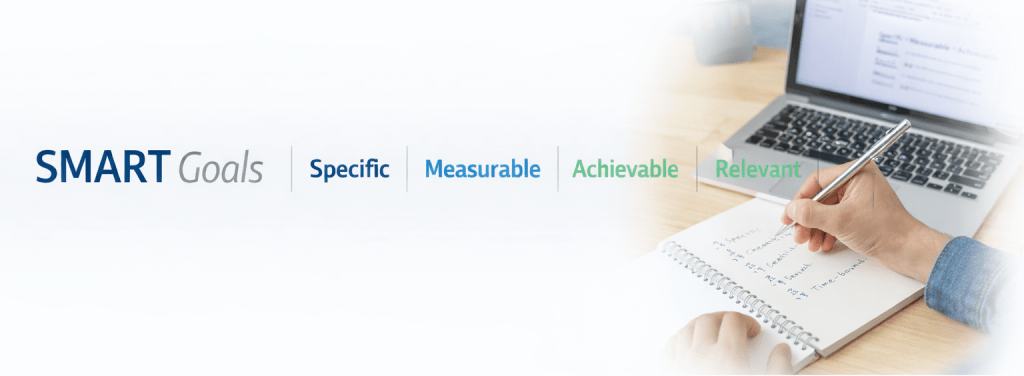
Students set a personal SMART goal (Specific, Measurable, Achievable, Relevant, Time-bound), tracked their progress in a shared document, and reflected on their learning at the middle and end of both semesters.

It became clear relatively quickly that motivation did not necessarily translate into action. At the start, most students were positive about setting goals, but maintaining consistent effort was much harder. Some students followed through, but many struggled to build regular study habits. As one student put it: “Actually, I was lazy. I played games instead of studying.”

One of the major issues was time management. As the semester progressed, students were dealing with assignments from other classes, part-time jobs, and extracurricular activities. In that context, independent study was often pushed aside. Goals that worked best tended to be small and flexible. For example, watching short videos or using vocabulary apps during spare moments was more sustainable than larger plans.

Reflection on their achievements was another challenge. Although many students did some kind of English study, they did not always record it. Logs were often left incomplete or written just before deadlines. This suggests that reflective practices do not come naturally to many students and need to be taught and supported more explicitly.

Despite this, there were also some clear positives. When students chose their own activities, they explored a wide range of options: YouTube, podcasts, apps, test preparation materials, and even using English at part-time jobs. Some adjusted their goals during the semester, suggesting a growing awareness of what worked for them. A number of students engaged consistently with the project, logged their activities in detail, and were able to see clear improvement in their language ability.

One clear takeaway is that learner autonomy does not develop on its own. Even setting a useful goal requires support and feedback, as students need help making their goals specific, realistic, and manageable. Ongoing support is also important to help students stay on track.

Despite my initial hopes, the project did not transform students into fully independent learners. However, it did encourage them to identify areas they want to improve and to think more carefully about how they study and what they are trying to achieve. Overall, this feels like a useful starting point.

If I run something similar again, I would:

  • provide more support when students first write their goals
  • show clearer examples of effective reflection
  • encourage smaller goals that fit into daily routines

Even small adjustments like these may help students turn good intentions into more consistent action

Six Years of Podcasting: What I Learned From Creating a Student‑Focused Show

When I made my first recording with a student about her study abroad experiences, I had no idea that it would grow into a six-year project involving more than 170 episodes. What started as a small experiment eventually developed into one of the most rewarding parts of my teaching life.

What the Podcast Is

The podcast is aimed at the university-aged students in my department. It includes a mixture of short monologues, conversations between two people, interviews with students and staff, and occasional videocasts recorded by students. Topics cover culture, language tips, study abroad, and university life. We now have twelve seasons, with around 180 publised episodes available on Spotify.

Why I Started

When I launched the podcast in 2019, I felt our curriculum was heavily focused on reading and writing, but offered limited listening practice. Although we had intensive listening tasks in class, I wanted something that students could listen to extensively and informally outside class.

The timing also played a role. The podcast began at the start of the coronavirus pandemic, which removed many opportunities for casual interaction. It offered students a way to hear teachers and classmates speak naturally at a time when we couldn’t have classes together. Students returning from study abroad had stories worth sharing, and this gave them a voice.

There was also a professional development aspect for me. Learning how to create and distribute a podcast felt valuable and directly relevant to teaching in the digital age.

What I Learned

Starting a podcast is far simpler than many people imagine. I used Anchor (now Spotify for Creators), and it handled hosting and distribution for free. For a small, niche podcast like ours, it worked perfectly.

The equipment does not need to be sophisticated. Although I bought a condenser microphone, pop-shield and audio interface, I ended up recording most episodes using the microphone on my iPad or iPhone. Editing was typically limited to trimming the beginning and end of the audio in GarageBand.

Production gets faster with experience. Once I had a system, I could record a five‑minute episode in under twenty minutes. I wrote rough scripts early on, but AI has made drafting much quicker in recent years.

Topic choice matters. Popular themes included pop culture, British culture, language tests, brand histories, and language tips. The most listened‑to episodes by far were interviews with students about their study abroad experiences. Over time, these have been integrated into our study abroad preparation courses, helping students learn from real voices and real situations..

Student involvement is powerful, even if difficult to coordinate. Students rarely volunteered, but almost all who participated felt proud afterwards. I would have liked more student‑generated content, although managing this takes more time.

The Future

Recently I experimented with videocasts since Spotify now supports video. I expected this to be more appealing since many students are heavy YouTube users. Surprisingly to me, the listener numbers did not change. It may be that Spotify may not be the best place for video. Perhaps if the videocasts were uploaded to YouTube, they might attract more engagement. In addition, video production takes significantly longer than producing audio‑only episodes. Even short clips require much more editing time, and this extra workload is difficult to justify for a small, niche project.

Looking ahead, I am aware that AI-generated podcasts are becoming more common. High‑quality automated content will likely fill podcast platforms in the near future. Even so, I believe there will always be a place for authentic student voices. Real experiences and real conversations have a value that AI cannot replace. Whatever direction the project takes, it has been a meaningful part of my work, and I hope it continues to provide students with something useful.

Link the podcast is here:

https://open.spotify.com/show/04UyCI0pyvJi6LBVr1QBRo