I often feel that if I had spent as much time actually studying Japanese as I have searching for some kind of magical silver bullet, I’d be fluent by now. If I’m being honest, it’s a form of procrastination. I have wasted countless hours reading blogs about SRS, the Heisig method, speed-running Kanji, and total immersion strategies like AJATT (All Japanese All The Time). You would think that as a language teacher, I’d have grasped the ultimate truth by now: the real secret is simply knuckling down and doing the work, not relentlessly consuming content about how to learn faster.
Over my years of teaching, I’ve come to the firm realization that real language progress happens away from the classroom, not just inside it. Because of this, I constantly urge my students to adopt extensive reading and listening habits on their own time. Of course, I say this while rather hypocritically failing to do it myself.
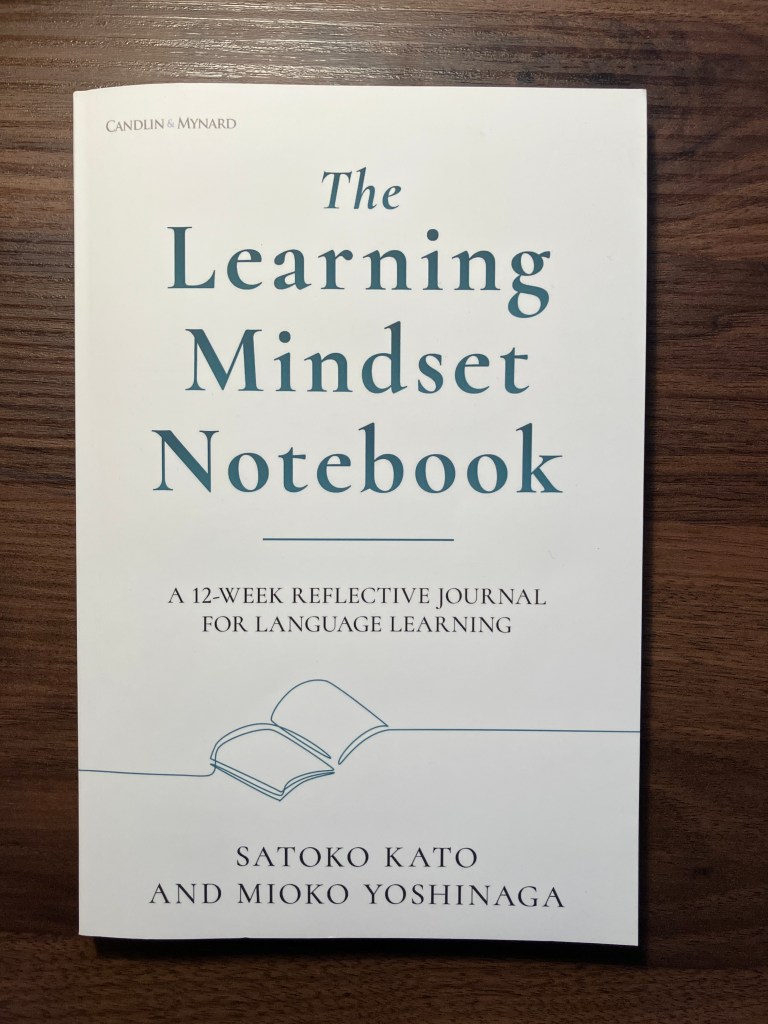
But recently, a book called The Learning Mindset Notebook caught my eye. The publishers describe it as a guided, hands-on companion for learners looking to take control of their own language journeys. It’s built around eight core principles designed to foster motivation, self-awareness, solid planning habits, and overall well-being. Ultimately, it promises to help learners bridge the gap between good intentions and sustained action. It sounded like exactly what I needed, so I ordered a copy.
I’m approaching this book from two different angles. First, as a language learner myself who has hit a frustrating plateau at the intermediate stage; and second, as an educator with an interest in learner autonomy and self-directed study.
So, I’ve been working my way through the exercises whilst simultaneously looking into the psychology behind them. My goal is two-fold: kickstart my own Japanese progress and draft a formal review for an academic journal down the line. I think it’s already paying off. Since opening the notebook, I’ve restarted my Japanese classes and finally feel like I am getting back on track after a long lay off from studying.
We’ll see how things progress from here.
 Richard Ingham