I’ve just returned from the JALT2026 International Conference in Nagoya, and one thing was noticeably different this time: I couldn’t walk ten feet without running into a familiar face from Nagoya, Kyushu, or previous conferences. For a bit of an introvert, it was reassuring to see that my extremely slow-and-steady networking process is finally starting to pay off.
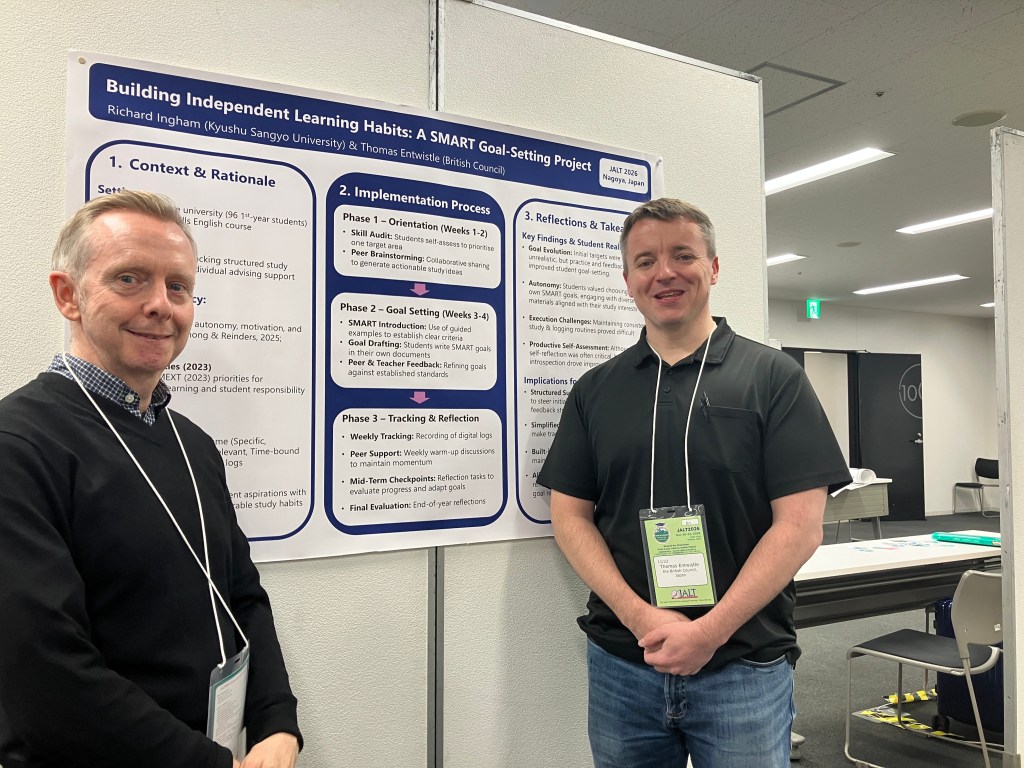
On Sunday afternoon, I teamed up with Tom to present a poster in the Learner Development SIG Forum titled “Building Independent Learning Habits: A SMART Goal-Setting Project”. It was rewarding to share how structured goal-setting and regular reflection can help university students take more ownership of their English study, and the conversations around our poster gave me plenty to think about with regard to possibly adapting these ideas to a new teaching context.
Going into the weekend, I was hoping to find plenty of sessions on extensive reading, learner autonomy and vocabulary learning. While those presentations seemed a little thinner on the ground this year, there were still enough to get stuck into. In particular Charles Brown’s presentation about using corpus tools like the NGSL to better match vocabulary load to learner levels might be of use in my TOEIC classes.
If I have one critique of the program, it’s that AI presentations felt inescapable. I generally avoided these as I found them to be a little repetitive, although I did attend a thought-provoking session on digital neocolonialism and the hidden costs of uncritical tech adoption. That said, catching up with old contacts sparked some interesting ideas for tech collaboration. A couple of people were interested in vibe coded apps (see previous post) that I have been using to support learner choice, so we’ll see if something comes of that.
All in all, it was a worthwhile trip: a bit heavy on the AI buzzwords, perhaps, but full of good company and fresh directions for the future.

