It’s been something of a week of TBLT (Task-Based Language Teaching) synchronicity. I’d noted in a previous blog my thoughts on the importance of tasks in my new context; then, a co-worker mentioned his use of TBLT, two related JALT pieces (an exposition by Rod Ellis and an interview with Shoko Sasayama) dropped through my analog mailbox, and I spotted an online seminar hosted by Tokyo JALT by Marcos Benavides of JF Oberlin University.
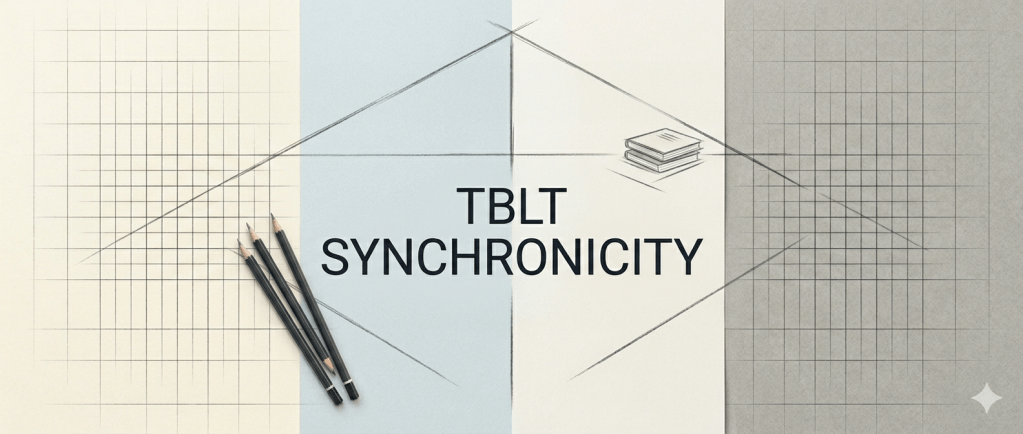
One of the most interesting things I got from this week’s festival of TBLT goodies was Benavides’s analogy of the artist. Traditional teaching is like a grid: we focus on one tiny square of grammar at a time, hoping the student eventually develops enough squares to produce a whole picture. It’s precise, but often demotivating because the “meaning” is buried. TBLT, by contrast, is more like a holistic sketch. From day one, the student draws the whole picture. It’s messy and imperfect, but it is meaningful from the start. As teachers, our job is to help the students gradually improve the whole image through feedback and repetition.
Although I have used “tasks” in the past to augment structured teaching, this was not pure TBLT, but rather Task-Supported Language Teaching (TSLT). The distinction has finally clicked. In TSLT, we teach the language forms first, which can trap students; they stop trying to communicate and focus too much on producing accurate forms. In “pure” TBLT, we let them use their own resources first. Watching Benavides’s videos of lower-level learners successfully navigating market research reports was fascinating. Whilst not perfect, they were effectively communicating their ideas.
The reality of teaching in a Japanese university means institutional structures and exams are often built on traditional foundations. However, I liked the advice from both Ellis and Benavides to keep the two approaches separate—a “Dual” or “Hybrid” approach. I think that this offers a practical window for my own professional development. By keeping a structural component and a task-based component distinct, I can wait for the right opportunities to experiment with “pure” TBLT when time (and energy) allows. I can see that this could help carve out a space for experimentation without going all out fo TBLT from the get go.
Final thought and key takeaways:
- A Task must have a “Gap”: If there’s no information or opinion to exchange, it’s just an exercise.
- Assessment follows Outcome: Did they achieve the goal? Accuracy of language is secondary to the communicative result.
- Sequence by Complexity: Move from a simple task such as a short “elevator pitch” to a “formal presentation” and build learner confidence and fluency through repetition.
- TBLT is a work in progress rather than a monolithic theory, requiring us as teacher-researchers to be flexible, experimental, and patient.
 Richard Ingham